
Introduction: The Trade Shock That Never Happened
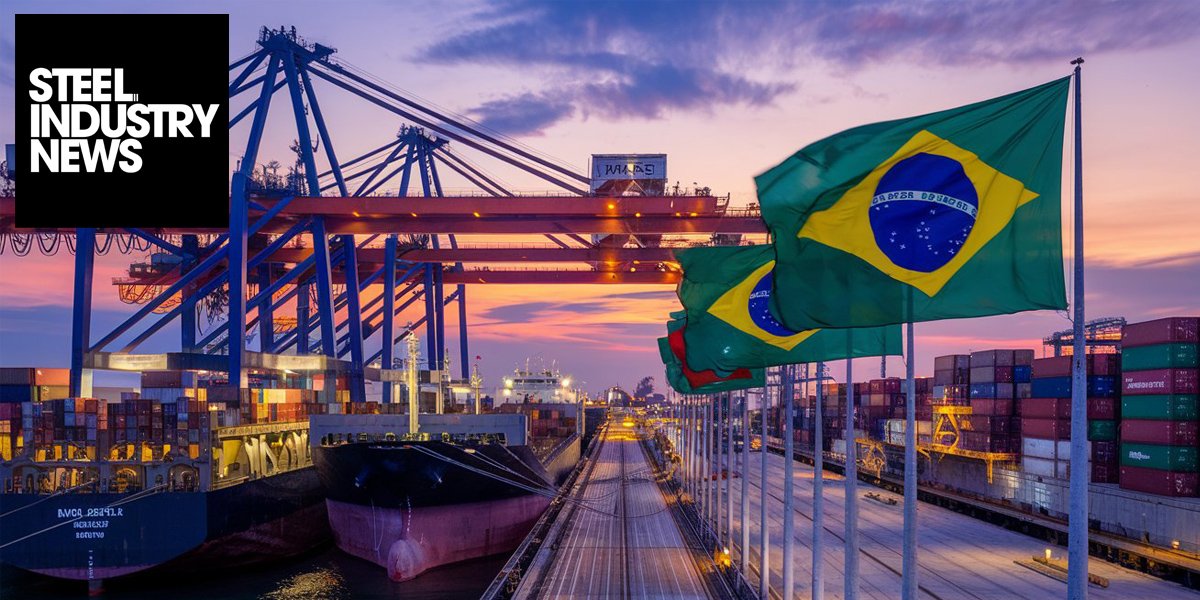
When President Trump announced in mid-July 2025 that the U.S. would impose a 50% tariff on Brazilian pig iron and iron ore pellets starting August 1, the global steel industry braced for a significant upheaval. Pig iron buyers, traders, and steel executives across the United States began preparing for a raw material cost surge that could reshape pricing, sourcing, and profitability almost overnight.
But in a dramatic turn of events, on July 31 — just one day before the tariff was due — the administration reversed course. Pig iron and pellets from Brazil would be exempt. What many expected to be a seismic market shift turned out, instead, to be a fleeting scare that left prices stable and trade flows unbroken.
The importance of this policy reversal is easier to understand in context. Brazil accounts for about 70% of all U.S. pig iron imports, supplying a product that is prized for its consistent chemistry, relatively lower carbon footprint, and cost competitiveness. Because the U.S. produces only a fraction of the pig iron it consumes, Brazilian shipments are fundamental to keeping Electric Arc Furnace (EAF) steel mills and ductile iron foundries running. The American steel sector doesn’t just buy from Brazil because it’s cheaper — in many cases, there simply are no adequate domestic substitutes in the volumes required.
Why Brazil Pig Iron Matters to the U.S.
Brazil’s dominance in the pig iron trade stems from its production quality, scale, and unique environmental profile. The iron content in Brazilian pig iron typically ranges between 92–94%, with low phosphorus levels that make it ideal for EAF steel production and ductile iron casting. In addition, several Brazilian producers use renewable charcoal from eucalyptus plantations rather than metallurgical coke — a choice that reduces greenhouse gas emissions and offers buyers an environmental marketing advantage.
In 2024 alone, the United States imported more than 3.8 million metric tons of pig iron, with Brazil delivering roughly 70% of that volume. This supply is critical because prime scrap — the traditional feedstock for EAFs — has become increasingly expensive and inconsistent in quality. Pig iron helps balance scrap blends, ensuring final steel products meet demanding specifications for flat-rolled steel, automotive-grade materials, and high-strength components.
For foundries producing ductile iron castings, the reliance is even greater. Nodular pig iron from Brazil meets precise metallurgical requirements that domestic sources cannot currently match at scale. Without steady imports, many foundries would face immediate operational disruptions.
The Tariff Threat and Sudden Reprieve
The market’s rapid pivot from anxiety to relief in late July can be traced through a short but intense series of events.
Timeline of Key Events:
| Date | Event |
|---|---|
| May–July 2025 | U.S. buyers front-load imports from Brazil, anticipating tariffs. |
| July 15, 2025 | White House confirms intention to impose a 50% tariff on Brazilian pig iron and DR-grade pellets. |
| Late July 2025 | Spot pig iron prices begin creeping upward; freight bookings surge. |
| July 31, 2025 | Trump administration announces exemptions for pig iron and pellets, effective August 1. |
| August 1, 2025 | Prices stabilize; no disruption to established import flows. |
Had the tariffs been implemented, landed costs for Brazilian pig iron in U.S. ports could have jumped by $180–$210 per ton — a seismic shift in a market where profitability often hinges on differences of $20–$40 per ton.
Impact on U.S. Steelmakers and Foundries
The last-minute exemption reshaped the winners and losers in the U.S. metals sector almost instantly. For EAF-based flat-rolled producers like Nucor and Steel Dynamics (SDI), as well as for ductile iron foundries such as Grede and Waupaca, the decision was a lifeline. These businesses depend heavily on Brazilian pig iron to control melt chemistry and costs. Without the exemption, they’d be scrambling to replace lost volumes at much higher prices.
Conversely, domestic pellet miners such as Cleveland-Cliffs and U.S. Steel’s Minnesota operations — which had anticipated a pricing advantage if Brazilian DR-grade pellets faced tariffs — lost that opportunity. Similarly, Petmin USA, which plans to begin producing nodular pig iron in Ohio, would have benefited from a tariff-driven price rise but now faces continued competition from lower-cost Brazilian supply.
Winners and Losers from the Exemption
| Category | Companies | Impact |
|---|---|---|
| Winners | Nucor, SDI, Big River Steel, Grede, Waupaca | Stable pig iron costs, uninterrupted supply chain, preserved production plans |
| Losers | Cleveland-Cliffs, U.S. Steel Minnesota, Petmin USA | Lost potential market share gains and pricing premiums |
Brazil’s Export Lifeline and Global Ripples
From Brazil’s perspective, the U.S. market is its largest and most profitable destination for pig iron exports. In some months, more than 60% of Brazil’s pig iron exports head directly to the United States. A sudden, prohibitive tariff would have forced exporters like Vale, Ferro Gusa Carajás, and Usina Siderúrgica de Marabá to redirect shipments to Europe or Asia, often at less favorable freight rates and prices.
Instead, the exemption ensures continued, predictable trade volumes and revenue flows. Brazilian suppliers can maintain production without facing the severe strain of finding alternative buyers in already competitive global markets.
A chart of recent price trends shows the impact vividly. The feared spike to over $650 per ton never came to pass:
Brazil Pig Iron Price Trends – CFR NOLA (2025)
| Month 2025 | Average Price ($/ton) |
|---|---|
| June | $404 |
| July | $408 |
| August | $410–$415 |
| (Projected with tariff) | $650+ |
Case Study: What the Exemption Meant for U.S. Foundries
Consider Grede Foundries, a major U.S. producer of ductile iron components serving the automotive and heavy equipment industries. The company relies entirely on Brazilian nodular pig iron for its melt operations. A 50% tariff would have increased its raw material costs by 20–25% immediately, likely forcing price increases downstream that could jeopardize contracts.
With the tariff exemption, Grede avoided any such disruption. Operations continued without resourcing exercises, prices for customers remained stable, and procurement teams avoided the scramble to secure limited domestic or alternative foreign supply. For companies in this sector, the exemption wasn’t just about saving money — it was about avoiding a potential operational crisis.
Market Outlook: Risks and Future Considerations
While the immediate threat has passed, the episode highlights an enduring reality for the U.S. steel sector: it remains highly dependent on Brazilian pig iron. Political shifts in either country could disrupt that flow again, and the absence of substantial domestic pig iron production means the risk cannot be easily mitigated.
Several projects are in motion to change this. U.S. Steel’s new pig iron caster at Gary Works and Petmin USA’s upcoming Ohio facility aim to supply a portion of domestic demand. However, these projects will not be fully online before 2026 or 2027. Until then, Brazilian pig iron will remain an essential — and vulnerable — part of the supply chain.
Conclusion
The July 31, 2025 decision to exempt Brazil pig iron from steep U.S. tariffs is a textbook example of how political actions and reversals shape commodity markets in real time. For most U.S. steelmakers and foundries, it preserved cost stability and ensured continuity in operations. For Brazilian exporters, it safeguarded their largest market. For domestic pellet producers, it was a missed windfall.
The broader lesson is that steel supply chains are deeply interconnected across borders, and policy shifts can cause ripple effects worldwide. In the words of one industry executive, “If you melt steel in an EAF, Brazil is part of your supply chain — whether you like it or not.”
For now, the Brazil–U.S. pig iron flow continues uninterrupted, serving as a reminder that in global metals markets, stability is often the most valuable commodity.
SOURCES
“US 50% tariffs on Brazil exclude pulp, refined copper, scrap but hit tallow and beef”
https://www.fastmarkets.com/insights/us-50-tariffs-on-brazil-exclude-pulp-refined-copper-scrap-but-hit-tallow-and-beef/
“Some key Brazilian exports spared from Trump’s new 40% tariff” (Reuters)
https://www.reuters.com/business/energy/some-key-brazilian-exports-spared-trumps-new-40-tariff-2025-07-30/
“Trump hits Brazil with tariffs, sanctions but key sectors excluded” (Reuters)
https://www.reuters.com/world/americas/trump-hits-brazil-with-tariffs-sanctions-key-sectors-excluded-2025-07-30/
“Impact of Proposed 2025 U.S. Tariffs on Brazilian Imports” (Brendon Beebe Steel Industry Newsletter)
https://brendonbeebe.substack.com/p/impact-of-proposed-2025-us-tariffs
“U.S. Imposes Additional 40% Tariff on Brazilian Imports (Updated)” (GHY)
https://www.ghy.com/trade-compliance/us-imposes-40-percent-tariff-brazilian-imports/
“Trump raises tariffs on Brazil to 50% but exempts crude, iron, other key exports” (S&P Global)
https://www.spglobal.com/commodity-insights/en/news-research/latest-news/crude-oil/073025-trump-raises-tariffs-on-brazil-to-50-but-exempts-crude-iron-other-key-exports
“Addressing Threats to The United States by the Government of Brazil” (White House)
https://www.whitehouse.gov/presidential-actions/2025/07/addressing-threats-to-the-us/
“New 40% Tariffs on Imports from Brazil into the U.S.” (Polsinelli)
https://www.polsinelli.com/publications/new-tariffs-on-imports-from-brazil-into-the-us
“Trump’s tariffs are giving Lula a boost and shifting Brazil’s geopolitics” (Atlantic Council)
https://www.atlanticcouncil.org/blogs/new-atlanticist/trumps-tariffs-are-giving-lula-a-boost-and-shifting-brazils-geopolitics/
Check out our most recent articles below:
- Steel Procurement Framework: Buy, Wait, or Hedge?
- HRC CSP Hits $1,080 | Input Costs Climb | Capacity at 80.4%
- Steel Forecasting 2026: The Old Model Fails, A New Framework
- HRC Climbs to $1,070, Manufacturing PMI Holds at 52.7, ISM Prices Hit 2022 Highs, Iran War Enters Month Three: What It Means for Steel Buyers
- How AI, Robotics, and Automation Are Reshaping the Steel Industry in 2026
📬 Enjoying this article? Do not miss the next one.
SUBSCRIBE below to the Steel Industry News email newsletter to get the latest updates delivered straight to your inbox. Includes a comprehensive reporting of all key topics impacting the steel industry. 🌍The Most Recent Steel News Reports — in one easy-to-read weekly format
🔐 Annual Plan: Just $300/year – that’s 6 months free .
By subscribing you agree to our Terms of Use, our Privacy Policy and our Information collection notice