
Key Takeaways
✅ Advanced robotics-including AI-driven humanoids-are emerging as the backbone of steel manufacturing and automotive production, improving efficiency and workplace safety
✅ US and European automakers (BMW, Ford, GM) are moving rapidly from piloting industrial and collaborative robots to testing the first humanoid models, with Figure AI pioneering full-scale commercial partnerships
✅ Steel manufacturers leverage welding robots, automated logistics, and computer vision to meet global competitive pressures, while carmakers focus on flexible, worker-friendly automation
Introduction
Industrial robotics is no longer a futuristic promise but a present-day reality-radically transforming steel plants and automotive factories worldwide. As economic pressures and skilled labor shortages intensify, both sectors are embracing robots not just for repetition and precision, but for their newfound flexibility and learning capabilities. With market leaders like BMW, Ford, and General Motors now deploying humanoid models (such as the Figure 03 robot), this technological wave is shaping the new standards of manufacturing quality, sustainability, and productivity. The following analysis draws on fresh data and case studies to illuminate how robotics have evolved from single-purpose, caged hardware into intelligent, collaborative partners, and why steel and automotive applications are leading this revolution.
Robotics in Steel Manufacturing: The New Industrial Backbone
Steel production has always demanded exceptional endurance, accuracy, and toughness-qualities found in traditional robots but now enhanced by smarter and more versatile automation. By 2025, robots are estimated to perform over one-third of all steel manufacturing tasks, compared to just 10% a decade earlier. This leap owes much to technological advancements in artificial intelligence, machine vision, and automated welding systems.
Steel companies are especially investing in robots for hazardous operations, high-temperature processes, and high-volume tasks. Automated welding robots, for instance, now routinely handle the most demanding joint applications, achieving repeatability to within ±0.08±0.08 millimeters and operating 40–60% faster than human welders. AI-powered inspection robots ensure only defect-free parts reach customers-a critical selling point as steel customers worldwide raise their standards.
Recent trends emphasize:
- Material Handling: Automated guided vehicles and robotic arms sort, weigh, and transport steel across factories with precision impossible for manual labor.
- Quality Assurance: Robots scan for inclusions, cracks, and surface anomalies using advanced cameras and sensors, creating digital audit trails for every product.
- Warehouse Automation: Logistics robots optimize inventory, moving stock on demand, and freeing human staff for design, maintenance, or problem-solving roles.
The Automotive Sector: Manufacturing’s Automation Vanguard
If steel factories represent manufacturing’s backbone, the automotive sector is its nerve center-requiring rapid innovation in response to shifting consumer needs, supply chain disruptions, and sustainability mandates. In the US and Europe, automakers have long piloted robotic technologies, but in 2024–2025 they have scaled up dramatically, moving toward smart cobots and even humanoid robots for complex, worker-friendly tasks.
Ford: Collaborative Robots and AI-Assembly
Ford’s approach centers on collaborative robots (“cobots”)-machines designed to operate shoulder-to-shoulder with human workers. These cobots grease camshafts, fill engine blocks, and perform precision inspections using machine vision and force sensors. By automating risk-prone, repetitive jobs, Ford’s cobots reduce employee injuries, improve job satisfaction, and help plants scale for new models with minimal retooling.
Ford also deploys legacy industrial robots for welding, painting, and logistics, but the main innovation is nimble, AI-integrated systems. Engineered for flexibility, these robots are retrained in days, not months, allowing Ford plants to adjust quickly to changing product demands. Predictive maintenance systems powered by AI anticipate failures and schedule repairs, minimizing downtime and maintaining the company’s legacy of reliability.
General Motors: Digital Twins and Autonomous Robots
GM invests aggressively in “digital twin” platforms-virtual replicas of entire manufacturing lines. By building plants in cyberspace using Nvidia Omniverse and Cosmos technologies, GM can simulate workflow changes, robot placements, and equipment upgrades before implementation, saving millions in engineering costs.
GM’s fleet includes autonomous robots for welding, battery QA, and paint repair, including platforms developed in partnership with Kepler (in China) and 3M. Advanced AI enables robots to learn from recorded data and video of skilled workers-an efficient path to training robots for new jobs with minimal programming, while freeing up human labor for creative and supervisory tasks.
GM’s strategy emphasizes collaboration between people and robots, with a strong commitment to retraining the workforce and keeping automation cost-effective and scalable, even at their largest US plants.
BMW and Figure: Humanoid Robots on the Line
Germany’s BMW has gone a step further, partnering with California’s Figure AI to pilot humanoid robots in real auto production. At BMW’s Spartanburg plant, Figure robots performed daily sheet metal handling for over five months, demonstrating industry-first reliability and resilience for real-world production. These robots insert components with millimeter precision, manage logistics tasks, and interact safely with human co-workers.
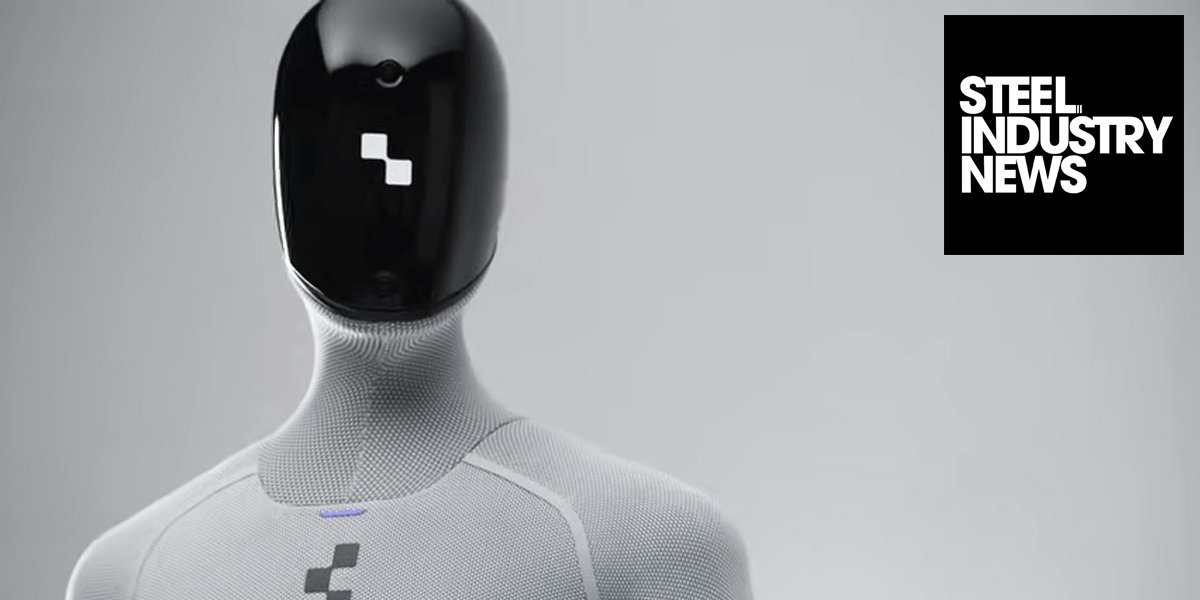
Unlike “single-purpose” robots, Figure’s 03 model is designed as a general-purpose manufacturing partner. It features 30 degrees of movement, sensitive tactile feedback, palm-mounted cameras, and an improved AI brain that can interpret voice commands and adapt to new workflows dynamically. Wireless docking and charging ensures near-continuous battery-powered operation.
BMW’s milestone-driven approach is deliberate-robot deployments start with well-defined, repetitive tasks and scale only after proven safety and efficiency. The company’s long-term vision, shared by partners like Mercedes and Tesla, centers on humanoid robots tackling jobs that are ergonomically risky, tightly scheduled, or uniquely variable-moving automation into spaces built for humans rather than machines.
Figure 03 Robot showing off domestic use cases for Humanoid Robots
Retirement of Figure 02 Robots at BMW Plants and Key Outcomes of the Deployment Study
Figure AI’s Figure 02 humanoid robots have now been retired from BMW Group Plant Spartanburg after an 11‑month deployment that moved humanoids from lab demos to day‑in, day‑out automotive production work. The study showed that humanoid robots can reliably execute repetitive, ergonomically challenging tasks on a live assembly line while generating rich data to design the next‑generation platform, Figure 03, which will replace Figure 02 in future industrial rollouts. Rather than ending BMW’s humanoid program, the retirement marks the conclusion of a successful pilot and the transition to more capable hardware and software.
Deployment setup and timeline
Within about six months of “bringing up” Figure 02, Figure AI delivered robots to BMW’s Spartanburg plant and started on‑site testing. By month ten, the system had reached full deployment on an active assembly line, running every working day, which demonstrated that integration into a complex brownfield plant could be achieved on a sub‑year schedule. The robots then continued in regular production, not just short trials, which is why this deployment is widely treated as a milestone for humanoids in manufacturing.
During this period, Figure 02 ran 10‑hour shifts from Monday to Friday, mirroring human work patterns and exposing the hardware and software to realistic multi‑shift stress. Over the full run, the robots logged more than 1,250 hours of runtime, took an estimated 1.2 million steps-roughly 200 miles of locomotion-and contributed to the assembly of over 30,000 BMW X3 vehicles. They also handled more than 90,000 individual part‑loading operations, providing a statistically meaningful base of cycles for measuring reliability and performance.
Task: sheet‑metal loading
The first and primary use case at BMW was sheet‑metal loading, a classic pick‑and‑place operation in auto manufacturing. In this station, an associate (or in this case, a humanoid) removes sheet‑metal parts from racks or bins and places them into a welding fixture; from there, six‑axis industrial robots weld and feed the parts into the main line. The job combines repetitive motion, awkward reaches, and a need for consistent precision, making it a good candidate for automation while improving ergonomics for human workers.
To quantify success, BMW and Figure defined three key performance indicators (KPIs): cycle time, placement accuracy, and human interventions. The cycle‑time requirement was 84 seconds for a full cycle, including a target of 37 seconds for the loading phase after the weld‑fixture door opened; placement accuracy needed to exceed 99% of cycles per shift with all three sheet‑metal parts correctly loaded; and the goal for interventions was zero operator‑triggered pauses or resets per shift. These KPIs forced the system to balance speed and precision under real throughput expectations rather than relaxed lab conditions.
Balancing speed, precision, and control
Meeting these KPIs required tight control over both locomotion and manipulation, especially given that parts had to be placed within a tolerance on the order of 5 millimeters in roughly 2 seconds. To achieve this, Figure 02 needed “precise yet adaptive” bipedal locomotion, meaning it had to place its feet rapidly and accurately while continually adjusting to small changes in floor conditions, fixtures, and the environment. This demanded real‑time feedback loops that coordinated whole‑body motion rather than treating walking and arm movement as separate problems.
On the manipulation side, Figure developed advanced hand–eye coordination algorithms so the robot could perceive part pose, adjust its grasp, and refine placement in the fixture under time pressure. Because BMW runs fleets rather than one‑off units, the team also built field‑calibration tools to deliver consistent performance across multiple robots and over time, ensuring that perception and kinematics stayed aligned even as components experienced wear or minor shifts. These software and calibration lessons now inform how Figure 03 is tuned and commissioned for industrial customers.
Hardware reliability and forearm redesign
Six months of daily runtime at Spartanburg provided unusually rich data for Figure’s mechanical and reliability teams. Across more than 1,250 operating hours, Figure 02 experienced relatively few hardware failures, which helped validate many of the fundamental mechanical and actuation design choices for industrial service. At the same time, the deployment highlighted specific weak points – most notably the forearm – that became direct inputs to the Figure 03 redesign.
The forearm emerged as the top hardware failure point during the BMW deployment. This subsystem is mechanically challenging because it must pack three degrees of freedom, power‑dense actuators, cabling, and electronics into a compact volume while staying cool under continuous operation. In Figure 02, the forearm contained a microcontroller‑based PCB that acted as a distribution hub between the main computer and the wrist actuators, which added complexity, dynamic cabling, and thermal constraints.
For Figure 03, the company completely re‑architected this area: the distribution board was eliminated, and each wrist motor controller now communicates directly with the main computer. This simplification reduces potential failure points, eases thermal management, and makes the overall system more robust under factory loads. In practice, that means higher expected uptime, easier service, and better scalability when many robots are deployed across multiple lines or plants.
Study results and impact on Figure 03
The BMW deployment demonstrated that humanoid robots can maintain production‑grade cycle times, achieve near‑perfect placement accuracy, and operate full shifts with minimal interventions in a real automotive plant. Data from every cycle-timing, success or failure, interventions, and wear patterns-fed directly into Figure’s understanding of what is required to “ship” humanoids as reliable products rather than research prototypes. This includes not just core robotics performance, but also integration with plant IT, safety processes, and human workflows.
As Figure 03 is introduced, the lessons from BMW define its operational readiness: more reliable hardware (especially in the arms and wrists), better thermal behavior, improved locomotion control, and more mature calibration and monitoring tools for fleet operation. BMW and Figure now treat the Spartanburg project as a foundational learning step that moves humanoids from early trials toward scalable, multi‑site deployment over the coming years, with robots taking over monotonous, high‑strain tasks while human workers focus on higher‑skill activities.
Comparing Leading Industry Robotics Projects
To understand the diverse approaches, let’s compare major automakers and steel manufacturers by their robotics strategies and technology partnerships.
| Company | Robot Type | Use Case Highlights | Humanoid/AI Focus |
|---|---|---|---|
| BMW | Industrial + humanoid | Material handling, auto assembly, logistics | Figure 03 deployment, voice AI |
| Ford | Cobots + industrial | Assembly, inspection, logistics, safety | AI-powered cobots, flexible control |
| GM | Autonomous + industrial | Digital twins, QA, welding, paint, battery | Nvidia AI, robot training, global |
| Mercedes, Tesla | Industrial + pilot humanoid | Early trials for logistics, production | R&D; exploring humanoids |
| POSCO, others | Industrial + AI welding | Predictive maintenance, perfect QA | Vision AI, multi-modal inspection |
| Universal Robots | Cobots, welding | Easy deployment, next-gen laser/plasma | User-focused, quick reconfiguration |
Humanoid Robots: The Frontier of Manufacturing Automation
Recent years have seen humanoid robots progress remarkably-moving from research labs and tech demos into factory pilots and controlled environments. By 2025, less than 5% of deployed robots in manufacturing facilities are humanoid, but their share is increasing thanks to advances in cost, reliability, and versatility. Market projections set humanoid robot industry value at $15 billion by 2030, with Europe and North America as key adopters.
Figure 03’s performance at BMW is a signal that this new wave is no longer speculative. Operating for months at a time, Figure’s robots performed 10-hour shifts handling X3 body shop production, meeting automotive tolerances, and achieving smooth integration with existing workflows. Their key differentiators include soft textile coverings for safety, ultra-sensitive tactile sensors, palm cameras, speech-command AI, and wireless charging that enables seamless deployment on variable schedules.
Industry-wide, humanoids are envisioned to automate:
- Ergonomically hazardous jobs requiring humanlike reach, dexterity, or mobility
- Tasks in legacy spaces designed for humans (stairs, narrow walkways, multi-tool stations)
- Multi-step processes in final assembly, quality auditing, and logistics handoffs
Current limitations include the necessity of structured environments, supervised operation, and careful integration with floor controls and plant software. Full autonomy-robots learning on-the-fly like skilled workers-remains a near-future goal, but significant progress is expected as experience accumulates from ongoing trials.
Robotics in Steel: Real-World Benefits and Continuing Challenges
Besides automotive, the steel sector stands as the strongest adopter of robots for dangerous or physically taxing jobs:
- Welding Robots: Able to perform over 40% of all steel welds, modern robots improve cycle time and quality.
- Inspection and Surface Defect Detection: Machine vision spots cracks, porosity, and inclusions, enhancing output quality and reducing claims.
- Automated Logistics: Self-driving vehicles and lifting robots now sort, transport, and stock steel with minimal human involvement, improving safety and warehouse efficiency.
However, even as robotic footprint grows, key challenges persist:
- Adapting robots for unpredictable, variable materials and layouts in older plants
- Ensuring safe collaboration between humans and machines
- Training staff to supervise, adapt, and repair new technologies as legacy skills become less vital
Nonetheless, AI-powered steel robots are now integrated into everyday workflows at US, European, and Asian mills, helping the industry compete on quality, cost, and agility.
Workforce, Safety, and Strategic Outcomes
Automation’s most critical impact lies in worker support-not simply replacing jobs, but reducing ergonomic injuries, eliminating unsafe roles, and enabling humans to contribute higher-level skills. Ford’s cobots work beside line staff, automating repetitive or heavy lifting, and are shut off instantly if a human is detected in danger. BMW’s collaboration with Figure emphasizes strict safety protocols, with robots never operated unsupervised until thousands of incident-free hours are achieved.
GM’s digital twin approach also boosts training outcomes, letting human engineers trial new robotic systems virtually-saving time and reducing stress from troubleshooting on live lines. American steel firms increasingly retrain staff for robot maintenance, coding, and QA management-ensuring the workforce evolves with technology.
The Outlook: From Pilots to Scale
Global demand for manufacturing robots is doubling every 10 years, with intelligent devices rapidly displacing old-fashioned fixed automation. By 2030, it is expected that robotic systems-powered by humanlike perception, real-time adaptation, and voice guidance-will be standard in industrial environments, including construction and chemicals.
North American and European automakers, steel producers, and AI startups are vying for leadership, with China and South Korea building state-of-the-art “dark factories” run around the clock by robots. Humanoid robots are likely to move from a handful of test roles into phased, full-factory deployment-if costs continue dropping and learning speed accelerates.
Manufacturers that balance automation with upskilling, workforce safety, and flexible, multi-modal integration will outperform those that focus only on bottom-line savings. The new path to competitive advantage is not simply purchasing robots, but building factories and teams that optimize technology as dynamic assets.
Conclusion
Robotics is not just a supporting tool-it has become the heart of steel production and automotive manufacturing. The transformation is visible in every plant, every supply chain, and every worker’s daily experience. Companies like BMW, Ford, GM, and innovators like Figure AI are racing toward a future where robots are learning partners, not static machines. For the steel industry, these advances ensure global competitiveness and better working conditions, while automakers secure agile, sustainable production lines for a changing world.
Business leaders should view robotics integration as a journey that combines technology, training, and organizational change. The critical lesson from 2025: focus on thoughtful adoption, build robust safety systems, involve workers in the transformation, and be ready to iterate. Robots will not just build our cars and steel-they will reshape our industries, our workforce, and our future.
SOURCES
Robotics and the Future of Steel Product Manufacturing from Purchased Steel: https://3laws.io/pages/Robotics_and_the_Future_of_Steel_Product_Manufacturing_from_Purchased_Steel.html
Figure announces commercial agreement with BMW Manufacturing: https://www.prnewswire.com/news-releases/figure-announces-commercial-agreement-with-bmw-manufacturing-to-bring-general-purpose-robots-into-automotive-production-302036263.html
Successful test of humanoid robots at BMW Group Plant Spartanburg: https://www.press.bmwgroup.com/usa/article/detail/T0444268EN_US/successful-test-of-humanoid-robots-at-bmw-group-plant-spartanburg?language=en_US
5 ways Ford is using AI [Case Study] : https://digitaldefynd.com/IQ/ford-using-ai-case-study/
Ford Saves Itself and Cobots Get Real: 25 in 2025 | IndustryWeek: https://www.industryweek.com/leadership/change-management/article/55310389/ford-saves-itself-and-cobots-get-real-25-in-2025
GM to Leverage Nvidia AI for Robots, Self-Driving Cars, Smarter Factories: https://www.iotworldtoday.com/transportation-logistics/gm-to-leverage-nvidia-ai-for-robots-self-driving-cars-smarter-factories-nvidia-gtc-2025
General Motors Leverages AI to Revolutionize Manufacturing in 2025: https://www.marketresearchfuture.com/news/general-motors-leverages-ai-to-revolutionize-manufacturing-in-2025
General Motors and 3M Partner on New Robotic Paint System: https://www.assemblymag.com/articles/99107-general-motors-and-3m-partner-on-new-robotic-paint-system
r/robotics on Reddit: Brett Adcock: “This week, Figure has passed 5 …”: https://www.reddit.com/r/robotics/comments/1nzl4d0/brett_adcock_this_week_figure_has_passed_5_months/
Steel Structure Welding Robot Market Outlook 2025-2032: https://www.intelmarketresearch.com/steel-structure-welding-robot-market-6519
Top 6 Steel Companies Adopting AI and Automation in 2025: https://www.steel-technology.com/articles/top-6-steel-companies-adopting-ai
Humanoid Robot Market Size, Share & Trends, 2025 To 2030: https://www.marketsandmarkets.com/Market-Reports/humanoid-robot-market-99567653.html
Universal Robots to Power Next-Gen Laser Welding, Finishing and Plasma Cutting: https://www.universal-robots.com/news-and-media/news-center/universal-robots-brings-next-gen-welding-to-fabtech-2025/
Humanoid Robots: From Demos to Deployment | Bain & Company: https://www.bain.com/insights/humanoid-robots-from-demos-to-deployment-technology-report-2025/
Humanoid Robots in 2025: The Next Stage of Evolution: https://www.automate.org/industry-insights/humanoid-robots-are-evolving
Fast Growth of Humanoid Robots in the Automotive & Logistics Industry: https://www.idtechex.com/en/research-article/fast-growth-of-humanoid-robots-in-the-automotive-and-logistics-industry/33181
UR10 Cobots Optimize the Assembly Line at Ford Romania: https://www.universal-robots.com/case-stories/ford-motor-company/
How Tesla and Ford Use Robotics to Revolutionize Manufacturing: https://www.cleverence.com/articles/business-blogs/how-tesla-and-ford-use-robotics-to-revolutionize-manufacturing-efficiency/
📬 Enjoying this article? Do not miss the next one.
SUBSCRIBE below to the Steel Industry News email newsletter to get the latest updates delivered straight to your inbox. Includes a comprehensive reporting of all key topics impacting the steel industry. 🌍The Most Recent Steel News Reports – in one easy-to-read weekly format
When you subscribe, you’ll gain exclusive access to the most comprehensive steel industry analysis presented in three formats:
- In-depth print articles that dig into market trends
- Engaging podcasts with the latest industry news
- Dynamic video updates that keep you one step ahead
Here’s what our subscribers say:
💬 “The Steel Industry Newsletter helps me with purchasing for our company.” – Frank, VP Procurement, Pacific Metal Buildings
💬 “Great content! This helps me greatly in starting my 2026 Forecast & Strategic Focus planning.” – Michael L
💬 “It keeps me up to date with the latest news.”-Kaan, Purchasing & Export Executive, Bekap Metal
Don’t miss out – secure your subscription today and stay informed, connected.
🔐 Annual Plan: Just $300/year – that’s 6 months free (a 50% discount compared to monthly)
By subscribing you agree to our Terms of Use, our Privacy Policy and our Information collection notice