

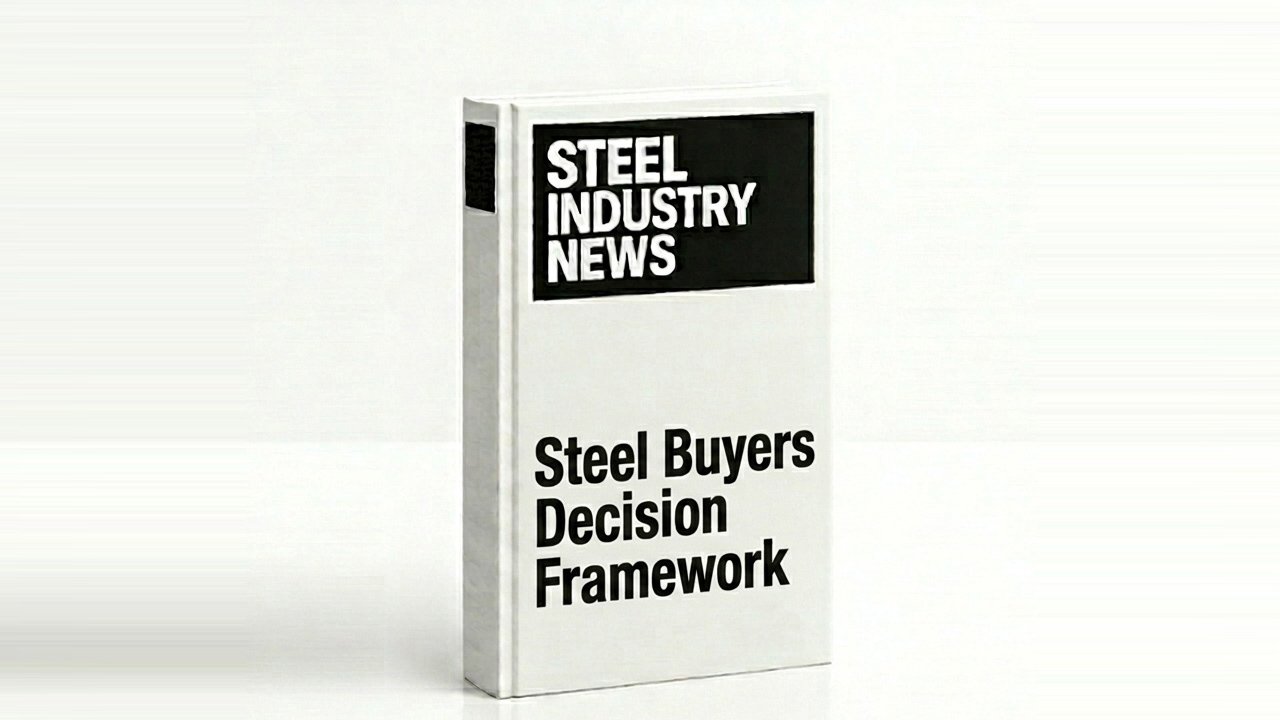
This 90+ page guide gives procurement professionals a complete framework for reading the modern steel market and translating that read into structured buying decisions on covered, balanced, and hedged positions. A reference designed to apply across cycles.
If you have been buying steel for any length of time, you have a list of indicators you watch. Mill spot prices, Capacity utilization, Lead times, Scrap, Iron ore and more. The list is well established, the data is broadly available, and tracking it is one of the basic competencies of the procurement function.
What if we told you that list, while still essential, is no longer enough to read the modern steel market?
That conclusion is the starting point for our new book, The Steel Buyer’s Decision Framework: A Comprehensive Guide to Forecasting, Posturing, and Hedging in Any Market. It is the most complete piece of analytical writing Steel Industry News has produced, and it answers a question we have been hearing from readers for the past several years.
The question goes something like this. The traditional indicators still update. The data is still credible. The methodology is still sound. So why does the market keep producing moves that the indicators do not seem to predict?
The answer is that the world around the indicators has changed. Trade policy now swings available domestic supply by significant volumes within quarters. Geopolitical events in regions most steel buyers never had to think about now push energy prices, freight costs, and insurance premiums into the steel cost stack. Macro stress signals flash in ways that the steel-specific data does not catch until months later. Currency dynamics that used to operate as background now shape competitive positioning in real time.
The traditional playbook is not wrong. It is incomplete.
Our new book offers a structured response. It builds a seven-layer framework that integrates the indicators you already track with the broader forces that now drive cycles. Then it does something most steel market writing does not: it translates the framework directly into procurement decisions. Three postures (covered, balanced, and hedged). A three-question test to run on every significant decision. The mechanics of hedging through CME HRC futures and CRU-indexed contracts. A portfolio approach to combining all of it into a coherent program.
We built the book to last. There are no current prices in it. No dated indicators. No references to last month’s data or this week’s news. The principles apply in any market and were chosen specifically to remain useful when you pull the book off the shelf years from now. Specific events change. The framework does not.
A few specifics worth knowing:
- 90+ pages, professionally typeset, delivered as a PDF
- A dedicated chapter mapping every indicator in our Steel Industry Insights Guide to its place in the framework, so the analytical work you already do plugs directly in
- Five framework reference cards designed to print, laminate, and keep at your desk
- A glossary covering everything from antidumping duties to basis risk
- A final chapter on the common mistakes procurement organizations make even when applying the framework, and the disciplines that prevent them
The book is priced at $99, which is a fraction of what you would pay a for competent consultant’s time. We think the comparison is fair. The book is the result of years of analytical work, written to be the durable reference that the modern steel buyer no longer has and increasingly needs.
If you have been reading Steel Industry News, you already know how we think. The book is the most complete version of that thinking we have ever put in one place.
[Get The Steel Buyer’s Decision Framework]
Read it once. Apply it across cycles.
-Steel Industry News
Disclaimer
The content provided in this article is for general informational purposes only and does not constitute financial, legal, or professional advice. Readers should seek consultation with qualified professionals before making any financial, investment, or legal decisions. We disclaim any liability for losses, damages, or adverse outcomes resulting from decisions made based on the information presented herein.
By subscribing you agree to our Terms of Use, our Privacy Policy and our Information collection notice